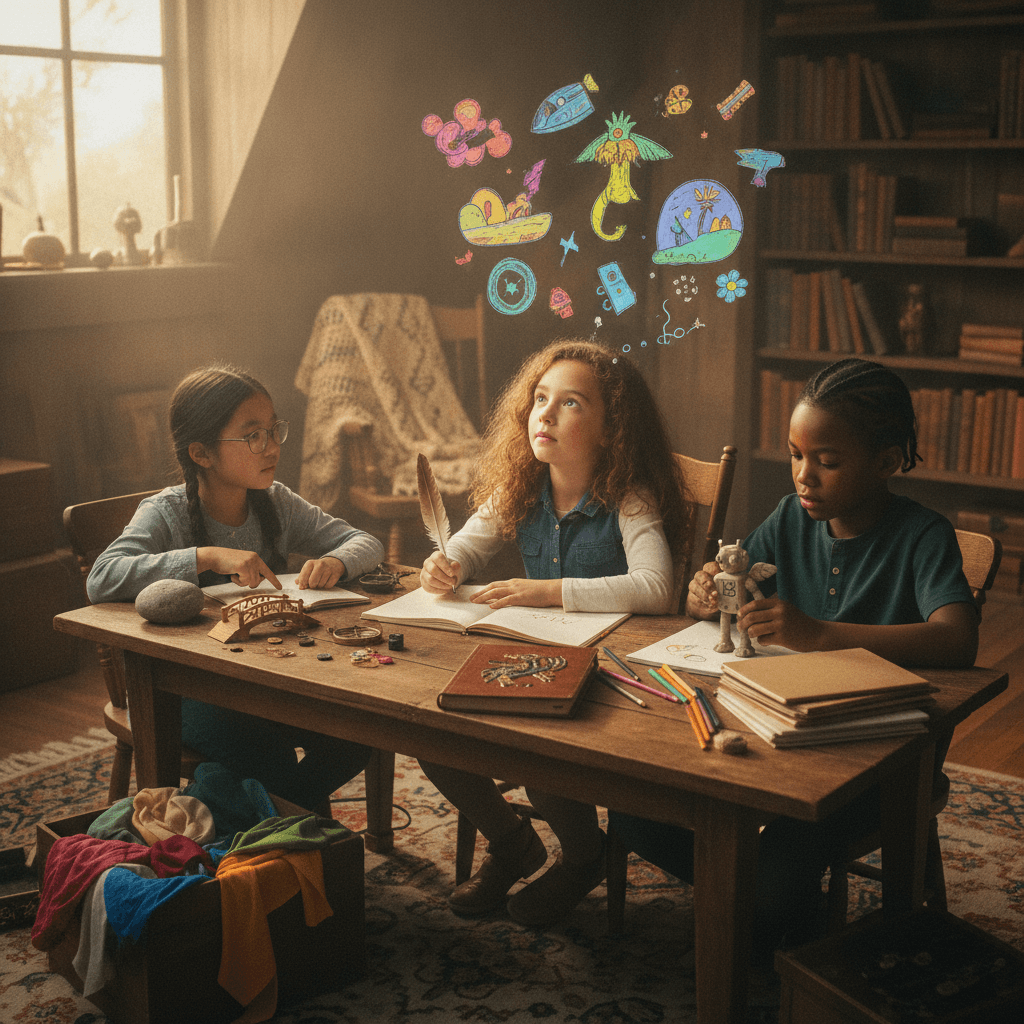
Developing creative writing skills in children is a truly rewarding endeavor. I have seen firsthand how fostering imagination and encouraging storytelling can open up new worlds for young minds. It is not just about writing stories, it is about nurturing self expression, critical thinking, and a deeper understanding of the world around them.
I believe every child possesses a natural ability to create. Our role as adults is to provide the right environment and tools to help that creativity flourish. Sometimes, we might think creative writing is a skill reserved for a select few, but this is far from the truth.
With simple strategies and consistent encouragement, any child can develop a love for putting their thoughts and ideas into words. I want to share some insights on how we can best support our children on this exciting path.
Understanding the Spark of Imagination in Young Writers
Creative writing for children often starts with imagination. This is the ability to form new images and ideas in their minds, even if these things are not real. Children naturally use their imagination in play, when they pretend to be superheroes or build fantastical structures with blocks. This same imaginative energy is the fuel for their writing.
When children engage in creative writing, they are not just putting words on paper. They are building new worlds, inventing characters, and solving problems within their narratives. This process strengthens their cognitive abilities and helps them process emotions and experiences in a safe, imaginative space. I have observed that children who write creatively often show more empathy and a better grasp of complex social situations.
Recognizing Natural Curiosity
Children are inherently curious. They ask endless questions and constantly seek to understand how things work and why things happen. This curiosity is a powerful asset in developing their writing skills. When we encourage them to explore their curiosities through writing, we give them a channel to articulate their wonderings and create their own answers.
For example, if a child is fascinated by dinosaurs, encouraging them to write a story about a friendly dinosaur or a journey to a prehistoric land can turn that interest into a writing opportunity. We can prompt them to think about what the dinosaur eats, where it lives, or what adventures it might have. This simple act connects their innate curiosity with the act of writing.
The Benefits of Early Exposure
Exposing children to creative writing early on has numerous benefits. It helps them develop a strong vocabulary and improves their grammar and sentence structure without feeling like a chore. Early exposure also builds confidence. When a child sees their own ideas take shape on paper, they feel a sense of accomplishment that encourages them to write more.
Moreover, I think this early engagement helps children become better readers. They start to understand story arcs, character development, and narrative techniques from a writer’s perspective. This makes their reading experiences richer and more meaningful, creating a positive feedback loop between reading and writing. Starting early truly sets a solid foundation for future academic and personal success.
Practical Strategies for Encouraging Storytelling
To truly foster creative writing, we need to move beyond simply telling children to write. We must give them concrete, engaging strategies that make the process enjoyable and accessible. I often suggest starting with simple prompts that spark their interest rather than leaving them with a blank page and no direction. The goal is to make writing feel like an adventure, not a task.
One effective strategy is to use visual cues. Show a child an interesting picture, perhaps of an old castle or a peculiar animal, and ask them to describe what is happening or what they imagine could happen next. This helps break down the initial barrier of not knowing what to write about. It turns a daunting task into an exciting exploration.
Creating a Conducive Environment
The physical and emotional environment plays a big part in a child’s willingness to write creatively. I recommend setting up a special “writing nook” if possible. This does not need to be fancy. It could be a quiet corner with a comfortable chair, some paper, pens, and perhaps a few inspiring books. The key is to make it a place where they feel safe to express themselves.
Equally important is creating a supportive emotional environment. This means praising effort over perfection. It also involves listening attentively when they share their ideas, even if the ideas seem outlandish. We want them to feel that their imagination is valued and that their stories are worth telling, no matter how wild they might be.
Prompting with Playful Ideas
Sometimes children need a little nudge to get their creative juices flowing. I have found that playful prompts work wonders. Instead of saying “write a story,” try suggesting “what if a cat could fly?” or “imagine you found a magical key, where would it lead?” These open-ended questions invite them into a world of possibilities.
Another fun technique is collaborative storytelling. Start a story with a sentence, then ask your child to add the next sentence, and continue taking turns. This removes the pressure of having to create an entire narrative alone and turns writing into a shared, fun experience. It also helps them see how stories are built piece by piece, which can be very insightful.
Building a Strong Foundation with Reading
Reading is perhaps the most fundamental element in developing strong creative writing skills. I always tell parents that a child who reads widely will inevitably become a better writer. Reading exposes children to diverse vocabulary, different writing styles, and various narrative structures. It fills their minds with ideas and shows them what is possible with words.
Think of reading as filling a well from which a child’s writing can draw. The more they read, the deeper and richer that well becomes. They learn about character arcs, plot development, and how to evoke emotions in readers simply by experiencing stories. It is an unconscious learning process, but incredibly powerful.
Diverse Genres and Authors
I encourage parents to expose their children to a wide array of books and authors. Do not limit them to just one genre, even if they have a favorite. Let them explore fantasy, adventure, mystery, historical fiction, and even non-fiction that tells a compelling story. Each genre offers unique perspectives and storytelling techniques.
Reading works from diverse authors also introduces children to different voices and cultural contexts. This broadens their understanding of the world and inspires them to find their own unique voice in writing. I have seen how a child who reads widely develops a more sophisticated and nuanced approach to their own creative projects.
Active Reading Techniques
Beyond simply reading, teaching children to engage in active reading can significantly boost their creative writing. This means encouraging them to think about what they are reading, not just passively consuming the words. I suggest asking questions like “Why do you think the character made that choice?” or “How did the author make you feel when this happened?”
Children can also underline interesting words or phrases, or even try to predict what will happen next in a story. This engagement helps them analyze the mechanics of storytelling and understand how authors achieve certain effects. When they understand these elements as readers, they are better equipped to employ them as writers.
Overcoming Common Hurdles in Children’s Creative Writing
Every writer, young or old, faces challenges. Children might encounter writer’s block, feel self-conscious about their ideas, or simply lose interest if writing feels too much like schoolwork. I believe our role is to help them navigate these hurdles with patience and supportive strategies. It is important to remember that progress is not always linear.
One common hurdle is the fear of making mistakes. Children can be very hard on themselves, and they might worry about spelling or grammar errors. I always reassure them that the first draft is for ideas. We can worry about polishing later. The priority is to get the story out of their heads and onto the page.
Gentle Feedback and Encouragement
When offering feedback, I advocate for a gentle and encouraging approach. Focus on what the child did well, perhaps highlighting an interesting character or a vivid description. Then, suggest one small area for improvement at a time, such as adding more descriptive words or expanding on a particular scene. Overwhelming them with too many corrections can stifle their enthusiasm.
Praise their effort and their willingness to try, regardless of the outcome. Remind them that writing is a skill that develops over time with practice. Sometimes, simply saying “I loved reading this part” can do wonders for a child’s confidence and motivation to continue writing.
Making Writing Fun Not a Chore
If writing feels like a chore, children will resist it. I think we need to continuously find ways to inject fun into the writing process. This could involve using silly prompts, writing stories about their favorite toys, or even turning writing into a game. For example, creating a story where they roll dice to determine plot points can be very engaging.
Allowing them to choose their own topics and formats is also key. Some children prefer to write poems, others enjoy short stories, and some might even like creating comic strips. Giving them autonomy over their creative work increases their ownership and enjoyment, so they stay motivated.
Utilizing Resources and External Support
While home support is invaluable, sometimes external resources and specialized guidance can significantly enhance a child’s creative writing journey. I have seen many children thrive when exposed to different learning environments and expert instruction. These outside resources often offer structured programs that complement what we do at home.
Consider looking into local workshops, school clubs, or online communities focused on young writers. These places provide opportunities for children to learn from experienced instructors and interact with peers who share their passion for writing. It is like joining a special team dedicated to imaginative exploration, and that can be really exciting for a child.
For parents seeking more structured programs, exploring various creative writing courses can be a wise step. These courses often provide systematic approaches to developing plot, character, setting, and dialogue. They help children build foundational skills while still encouraging individual expression.
The Value of Peer Interaction
Peer interaction in a creative writing setting is incredibly valuable. When children share their stories with others, they learn to articulate their ideas and receive constructive feedback. They also discover that other children might have similar interests or face similar writing challenges. This builds a sense of community and reduces feelings of isolation that can sometimes accompany creative pursuits.
Group activities, like writing prompts where everyone contributes to a shared story, can also foster teamwork and inspire new ideas. Hearing different perspectives on a story can broaden a child’s understanding of narrative possibilities and encourage them to experiment more in their own work.
Expert Guidance and Structure
Professional instructors often bring a depth of knowledge and a structured curriculum that can greatly benefit young writers. They can teach specific techniques for brainstorming, outlining, and revising stories. This structured learning can help children move beyond basic storytelling to develop more complex and engaging narratives.
Expert guidance also means receiving targeted feedback that helps a child grow without stifling their unique voice. Instructors can identify areas where a child needs more support and provide tailored exercises. This focused attention can accelerate their skill development and deepen their appreciation for the craft of writing.
The Long-Term Impact of Nurturing Creative Expression
The benefits of developing creative writing skills in children extend far beyond the classroom or the pages of a storybook. I believe these skills lay a foundation for success in many areas of life. When children learn to express themselves creatively, they are also developing crucial life skills that will serve them well into adulthood. This is not just about writing award-winning novels. It is about building a capable, articulate, and imaginative individual.
Creative writing fosters a unique way of thinking that is highly valued in today’s world. It encourages children to see problems from multiple angles and to come up with innovative solutions. They learn to think outside the box, a quality that is essential for both personal and professional growth. I often see how children who write creatively are also better communicators in general.
Critical Thinking and Problem Solving
When children create a story, they are constantly engaging in critical thinking. They have to decide what happens next, how characters react, and how to resolve conflicts. This process involves weighing different options and understanding cause and effect. They are essentially practicing problem solving in a fictional setting.
I find this ability to think critically about narrative elements translates directly into real-world problem solving. They become adept at analyzing situations, identifying challenges, and brainstorming creative solutions. This skill is invaluable in academics, future careers, and personal relationships.
Enhanced Communication Skills
Creative writing directly enhances a child’s communication skills. It improves their vocabulary, grammar, and their ability to construct clear and coherent sentences. When they write, they are learning to organize their thoughts logically and express them effectively to an audience.
This improved written communication naturally spills over into verbal communication. Children who write creatively often speak more articulately and confidently. They can express their ideas and feelings with greater precision, which strengthens their ability to connect with others and advocate for themselves. This is a powerful outcome of nurturing their inner author.
Final Thoughts on Nurturing Young Authors
Developing creative writing skills in children is a profound journey, one I believe every child deserves to experience. It involves much more than just putting words on paper. It is about unlocking imagination, fostering self expression, and building a toolkit of critical thinking and communication abilities that will serve them throughout their lives. From encouraging early curiosity to providing playful prompts, every step we take helps to light that creative spark.
We must remember to create a supportive environment, offer gentle feedback, and always make writing a joyous activity rather than a chore. Whether through diverse reading or structured courses, giving children the chance to explore their narrative voice empowers them in ways we can only imagine. I truly hope you feel inspired to encourage the young writers in your life to pick up a pen and let their stories unfold. Their voices are important and their imaginations are limitless. Let us help them share their unique perspectives with the world.